


TL;DR:
- UV protection for children involves daily use of sunscreen, UPF-rated clothing, and behavioral strategies like seeking shade. Both UVA and UVB rays harm children’s vulnerable skin, making consistent protection essential year-round even on cloudy days. Layering methods and timing, such as the shadow test, help reduce children’s risk of skin damage and long-term health issues.
UV protection is the set of methods and products used to block or reduce a child’s exposure to the sun’s harmful ultraviolet rays, preventing sunburn, skin damage, and long-term cancer risk. The American Medical Association and Johns Hopkins Medicine both recommend a layered approach: broad-spectrum sunscreen, UPF-rated clothing, and behavioral controls like shade-seeking. Children’s skin is thinner and more vulnerable than adult skin, making consistent UV protection a daily necessity, not a seasonal one. BANZ has built its entire product line around this reality, serving over 2 million families across six continents.
What are UVA and UVB rays, and why do they harm children?
UVA and UVB are the two types of ultraviolet radiation that reach the earth’s surface and cause measurable skin damage. Understanding the difference between them helps parents choose the right protection for each situation.
- UVA rays penetrate deep into the skin’s layers. They cause premature aging, wrinkles, and long-term cellular damage. UVA rays are present year-round and pass through glass and clouds with little reduction.
- UVB rays are the primary cause of sunburn. They directly damage DNA in skin cells, which is the mechanism that leads to skin cancer. UVB intensity varies by season, time of day, and altitude.
- Children’s skin is especially vulnerable. Their thinner skin absorbs UV radiation more readily than adult skin, and cumulative childhood sun exposure is a major predictor of adult skin cancer risk.
- Tanning is not protection. Melanin, the pigment that causes a tan, offers only the equivalent of approximately SPF 4 protection. That level is far too low to prevent cancer or photoaging.
- Clouds do not block UV. Up to 80% of UV rays penetrate cloud cover, which means overcast days carry real risk.
The practical takeaway for parents: both UVA and UVB require daily defense, not just protection on visibly sunny days. A child playing outside on a cloudy afternoon in october is still receiving a meaningful UV dose.
How to use sunscreen correctly on children
Sunscreen is the most widely used UV protection tool, but most parents apply it incorrectly. The right product, applied the right way, makes a significant difference in actual protection delivered.
Choosing the right sunscreen
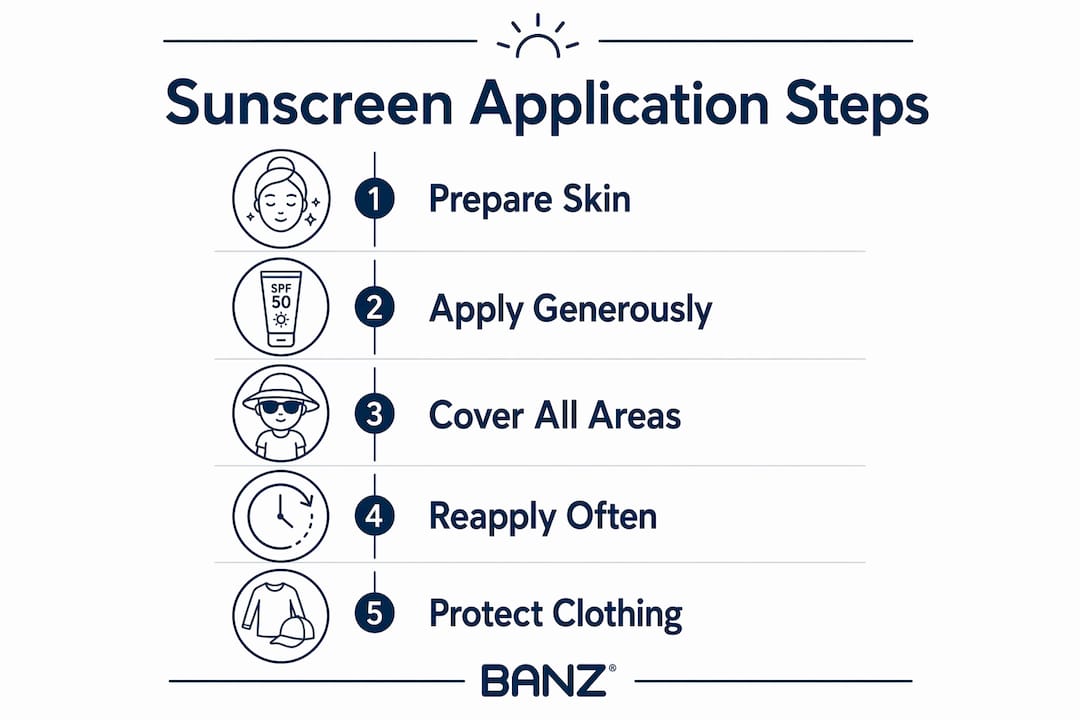
Broad-spectrum, water-resistant sunscreen with at least SPF 30 is the minimum standard for children. SPF 15 blocks 93% of UVB rays; SPF 30 blocks 97%. That 4-point difference matters over a full day outdoors. Broad-spectrum means the formula protects against both UVA and UVB, which single-spectrum products do not.
The FDA recently approved bemotrizinol as a new sunscreen ingredient. Bemotrizinol provides effective, low-irritation protection against both UVA and UVB and is approved for children aged 6 months and older. Parents who have struggled with sensitive-skin reactions to older chemical filters should look for this ingredient on the label.
Applying and reapplying sunscreen
- Apply 15 minutes before going outside. Chemical filters need time to bind to the skin before they become effective.
- Use enough product. Most parents apply less than half the amount needed. For a child’s full body, use roughly one ounce, about the size of a golf ball.
- Cover all exposed skin. Ears, the back of the neck, tops of feet, and the back of the hands are commonly missed.
- Reapply every 2 hours. After swimming or sweating, reapply immediately. No sunscreen is waterproof; water-resistant formulas maintain SPF for only 40 or 80 minutes in water.
- Check the expiration date. Sunscreen degrades over time, especially when stored improperly.
Pro Tip: Store sunscreen in a shaded cooler or bag during beach and pool days. Heat and direct sun exposure degrade chemical ingredients quickly, reducing the product’s actual SPF well before the bottle is empty.
What clothing and accessories provide the best UV protection?
Clothing is the most reliable UV protection solution available because it does not wash off, rub off, or require reapplication. The key is knowing which garments actually deliver on their protection claims.
Understanding UPF ratings
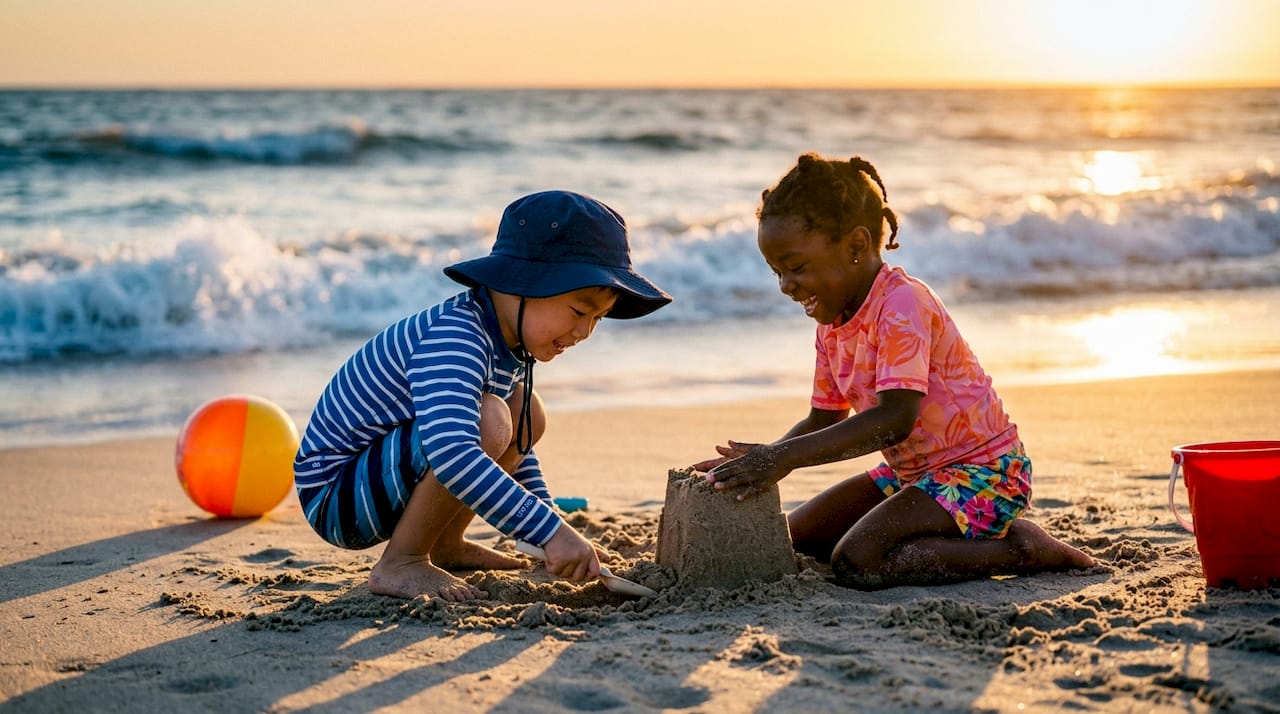
UPF stands for Ultraviolet Protection Factor. It measures how much UV radiation a fabric blocks, and it applies to both UVA and UVB. SPF, by contrast, applies only to sunscreen and measures UVB blocking. A garment rated UPF 50 blocks 98% of UV radiation, while UPF 25 blocks 96%. The difference is meaningful for children spending hours in direct sun.
Not all clothing marketed as “UV resistant” carries a lab-certified UPF rating. Only certified UPF garments reliably block UV. Natural cotton, when wet or stretched, loses much of its protective ability. A dry white cotton T-shirt may offer UPF 5 to 7. Wet, it drops further. Parents should look for the UPF certification label, not just the marketing claim.
For more on how fabric color and weave affect protection, the clothing color and UV blocking guide from BANZ covers the specifics in detail.
Hats, sunglasses, and accessories
| Item | Protection level | What to look for |
|---|---|---|
| Wide-brimmed hat (3+ inch brim) | High | Covers face, ears, and back of neck |
| Baseball cap | Moderate | Leaves ears and neck exposed |
| UV-blocking sunglasses | High for eyes | Look for 100% UVA/UVB blocking label |
| UPF 50+ rashguard | Very high | Lab-certified, stays effective when wet |
| Standard T-shirt (dry) | Low | UPF 5–7, drops further when wet |
Sunglasses are frequently overlooked in children’s UV protection routines. UV exposure to the eyes accumulates over a lifetime and contributes to cataracts and macular degeneration. Optometric standards call for lenses that block 100% of UVA and UVB. Lens darkness does not indicate UV protection level; only the UV-blocking label does.
Pro Tip: When buying children’s sunglasses, check for the “100% UV protection” or “UV400” label rather than relying on lens color or price. Dark lenses without UV coating can actually increase eye damage by causing pupils to dilate and admit more radiation.
For parents looking at UPF 50 swimwear options, BANZ provides a detailed breakdown of what the rating means in practice.
When and where do children need UV protection the most?
Timing and location determine how much UV radiation a child actually receives. Knowing the high-risk windows helps parents plan outdoor activities more safely.
- Peak UV hours run from 10 AM to 4 PM. The shadow test is a practical check: if a child’s shadow is shorter than their height, UV intensity is at its strongest and full protection is needed.
- Reflective surfaces multiply exposure. Water, sand, and concrete reflect UV rays back upward, increasing total exposure at the beach or pool significantly compared to a shaded park.
- Altitude raises UV intensity. UV radiation increases with elevation. Families hiking or skiing at altitude need stronger protection than at sea level, even in winter.
- Year-round protection is necessary. UV rays are present in every season. Winter sun on snow can cause sunburn just as effectively as summer sun at the beach.
- Shade is effective but not complete. Open shade reduces UV exposure but does not eliminate it. Reflected and scattered UV rays still reach skin under a beach umbrella or tree canopy.
For beach-specific guidance, the beach UV protection resource from BANZ explains why sand and water environments require a higher level of defense. Parents planning activity-specific outings can also use the activity-rated UV protection guide to match protection methods to specific outdoor scenarios.
Common myths and mistakes in UV protection for children
Misinformation about sun safety leads parents to underprotect their children in predictable ways. These are the most common errors.
- Myth: A tan protects against further sun damage. Tanning signals skin damage, not adaptation. Melanin’s protection is roughly equivalent to SPF 4, which is insufficient to prevent cancer or photoaging at any skin tone.
- Myth: Sunscreen alone is enough. Sunscreen is one layer of a multi-method approach. Clothing, shade, and timing all contribute to total protection. Relying on sunscreen alone leaves gaps.
- Myth: Cloudy days are safe. 80% of UV rays penetrate clouds. Skipping sunscreen on overcast days is one of the most common and preventable mistakes parents make.
- Myth: “Waterproof” sunscreen does not need reapplication. No sunscreen is waterproof. The FDA prohibits that label. Water-resistant formulas last 40 or 80 minutes in water, then require reapplication.
- Mistake: Applying sunscreen only on sunny summer days. UV exposure accumulates year-round. Daily application, even in winter and on cloudy days, is the standard recommended by dermatologists and the AMA.
Pro Tip: Layer your protection methods every time. Sunscreen plus a UPF 50+ garment plus a wide-brimmed hat provides far more reliable coverage than any single method alone. Think of each layer as a backup for the others.
The sun safety checklist for caregivers from BANZ is a practical reference for building a complete protection routine.
Key Takeaways
Effective UV protection for children requires daily, layered use of broad-spectrum sunscreen, UPF-certified clothing, and behavioral strategies like shade-seeking and avoiding peak UV hours.
| Point | Details |
|---|---|
| Use SPF 30+ broad-spectrum sunscreen | Apply 15 minutes before outdoor exposure and reapply every 2 hours or after swimming. |
| Choose certified UPF 50+ clothing | Lab-rated garments block 98% of UV; untested “UV-resistant” claims offer no reliable protection. |
| Apply sunscreen on cloudy days | Up to 80% of UV rays penetrate clouds, making daily application necessary year-round. |
| Use the shadow test for timing | If a child’s shadow is shorter than their height, UV intensity is at its peak and full protection is needed. |
| Layer methods for best results | Sunscreen, UPF clothing, wide-brimmed hats, and UV-blocking sunglasses together provide the most reliable defense. |
What I’ve learned from watching parents protect their kids in the sun
Most parents I’ve worked with start out thinking sun protection is a summer-only task. They pack sunscreen for beach trips and forget about it the rest of the year. That single habit gap is where most childhood UV damage actually happens, on ordinary school days, weekend errands, and cloudy afternoons at the park.
The shift that makes the biggest difference is treating UV protection like a seatbelt. You do not decide whether to use it based on how the weather looks. You use it every time. Once parents internalize that 80% of UV rays come through on cloudy days, the habit becomes automatic.
Children who resist hats and sunglasses are a real challenge. What I’ve found works is giving kids some ownership. Let them pick the hat style or the sunglass color. BANZ makes children’s sunglasses in designs kids actually want to wear, which removes a lot of the daily friction. When protection feels like a choice rather than a rule, compliance goes up.
The shadow test is the single most practical tool I recommend to parents. It requires no app, no UV meter, and no guesswork. Step outside, look at the shadow, and act accordingly. Build that check into your routine every time you head outdoors with your kids, and you will catch the high-risk windows reliably.
— Shari M. Murphy
BANZ UV protection gear for children
BANZ builds UV protection products specifically for children, starting from the ground up with UPF 50+ swimwear and UV-blocking eyewear designed to stay on active kids.
The UV eye protection resource from BANZ is a practical reference for parents and eye care professionals selecting children’s sunglasses that meet UV400 standards. For water days, BANZ’s UV swim goggles and UPF children’s swimwear provide certified protection that holds up in the water. Every product in the BANZ line is built to the same standard: reliable, lab-verified UV defense for children who spend real time outdoors. Parents who want to understand UV protection in eyewear across different outdoor contexts will find the lens-rating standards consistent across categories.
FAQ
What is UV protection and why do children need it?
UV protection refers to methods and products that block or reduce exposure to ultraviolet radiation from the sun. Children need it daily because their thinner skin absorbs UV more readily, and cumulative childhood exposure is a major predictor of adult skin cancer risk.
What SPF level is recommended for children?
Broad-spectrum, water-resistant sunscreen with at least SPF 30 is the minimum standard for children. SPF 30 blocks 97% of UVB rays and should be reapplied every 2 hours or immediately after swimming.
What does UPF 50+ mean on children’s clothing?
UPF 50 means the fabric blocks 98% of UV radiation, including both UVA and UVB. Only lab-certified UPF garments deliver this reliably; untested “UV-resistant” labels offer no guaranteed protection level.
Do children need sun protection on cloudy days?
Yes. Up to 80% of UV rays penetrate cloud cover, meaning overcast days carry real UV risk. Daily sunscreen application is recommended regardless of weather or season.
How do I know when UV intensity is highest for my child?
Use the shadow test: if your child’s shadow is shorter than their height, UV rays are at their strongest. This typically occurs between 10 AM and 4 PM and signals the need for full layered protection.
Recommended
- UV Radiation and Children’s Skin Damage: A Parent’s Guide – BANZ® Carewear USA
- How UV Awareness Reduces Long-Term Risk for Kids – BANZ® Carewear USA
- UV Eye Protection for Children: A Resource for Eye Care Professionals – BANZ® Carewear USA
- Types of UV Radiation: Children’s Sun Safety Guide – BANZ® Carewear USA


