


TL;DR:
- Applying mineral-based SPF 30+ sunscreen 15 to 30 minutes before outdoor exposure ensures full protection for toddlers. Reapplying every two hours, especially after water or sweating, maintains effective coverage, and physical barriers like UPF clothing and hats complement sunscreen for comprehensive sun safety. Consistency in daily sun protection routines fosters lifelong healthy habits and reduces the risk of sun damage.
Applying sunscreen on a toddler correctly means using a broad-spectrum SPF 30+ mineral formula on all exposed skin, starting 15–30 minutes before going outside. SPF 30 blocks approximately 97% of UVB rays. That number drops fast when you apply too little, miss spots, or skip reapplication. The American Academy of Pediatrics recommends mineral-based sunscreens with zinc oxide or titanium dioxide for children over six months old because these ingredients sit on top of the skin and cause less irritation than chemical alternatives. Getting the formula right is only half the job. Timing, coverage, and reapplication complete the picture.
Which sunscreens are safest for toddlers?
Mineral-based sunscreens with zinc oxide or titanium dioxide are the safest choice for toddlers. These ingredients work by physically reflecting UV rays rather than absorbing them into the skin. They are less likely to cause irritation on sensitive toddler skin, and pediatric dermatologists consistently recommend them over chemical alternatives.
Spray sunscreens are a different story. The FDA and pediatric health authorities discourage spray formulas for young children because of inhalation risks. Stick and lotion formats give you better control over coverage and let you rub the product in properly.
SPF level matters, but not in the way most parents expect. SPF 30 is the minimum recommended level. SPF 50 offers slightly more protection and is worth choosing because most parents apply less than the lab-standard 2 mg/cm² dose. A higher SPF compensates for thinner or uneven application, which is nearly universal when you are chasing a toddler around.
- Choose broad-spectrum on the label. This means the product protects against both UVA and UVB rays.
- Look for zinc oxide or titanium dioxide as the active ingredient.
- Select SPF 30 or higher, with SPF 50 preferred for active outdoor days.
- Avoid spray formulas for children under school age.
- Check for water-resistant labeling if your toddler will be near water, but understand what that label actually means (covered in the next section).
Pro Tip: Fragrance-free and dye-free mineral sunscreens reduce the chance of skin reactions on toddlers with eczema or sensitive skin. Check the inactive ingredients list, not just the active ones.
How to apply sunscreen toddler correctly, step by step
Timing is the first variable parents get wrong. Apply sunscreen 15–30 minutes before going outside so the formula has time to bind to the skin. Applying it at the door on the way out leaves your toddler unprotected for the first critical minutes outdoors.
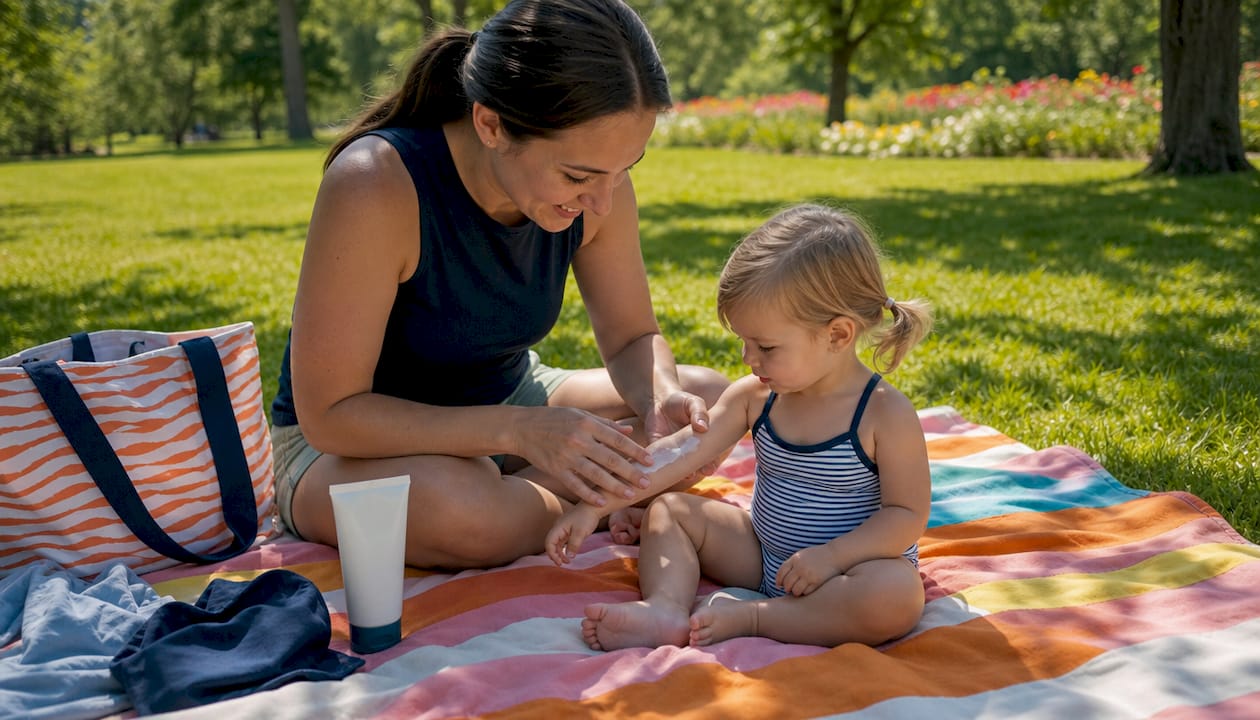
The standard application dose is 2 mg/cm², which translates to roughly one ounce (about a shot glass worth) for a full adult body. For a toddler, use enough to cover all exposed skin generously. Most parents use far less than needed, which is why SPF 50 is a practical buffer.
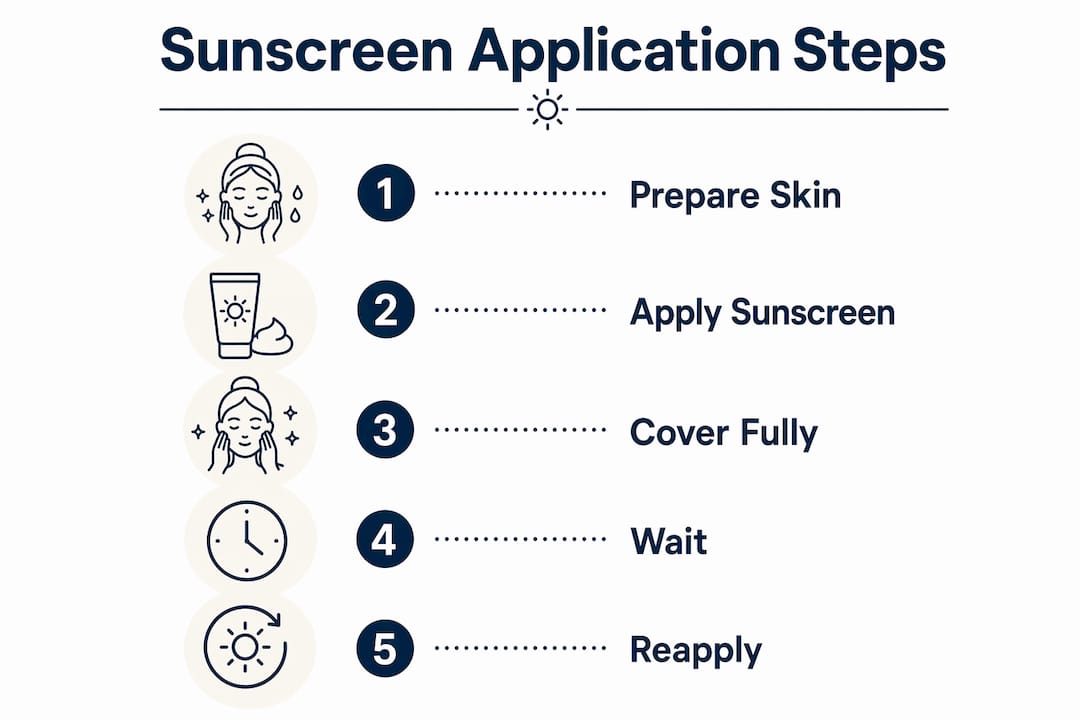
Step-by-step application
- Start with the face. Dot sunscreen on the forehead, nose, cheeks, and chin. Rub in gently using circular motions. Avoid the eye area, but do not skip the eyelids, temples, or the bridge of the nose.
- Cover the ears and neck. These are the most commonly missed spots. The back of the neck and the tops of the ears burn quickly and are easy to forget.
- Do the arms and hands. Include the backs of the hands and between the fingers if your toddler will be playing in sand or water.
- Move to the legs and feet. Cover the tops of the feet and the backs of the knees. Both spots burn fast and are frequently skipped.
- Check the shoulders and upper back. These areas get direct sun exposure during outdoor play and need full coverage.
- Rub it all in. Do not leave white streaks or unblended patches. Mineral sunscreens can appear white at first but rub in with a little patience.
Wiggly toddlers make this harder than it sounds. A few approaches work well. Let your toddler hold a small toy or snack during application. Apply sunscreen while they watch a short video on a tablet. Make it a game by narrating each body part as you go. Some parents apply sunscreen right after the morning bath when the toddler is already still and calm.
Pro Tip: Apply sunscreen to your own hands first, then transfer it to your toddler’s skin. This gives you more control and prevents cold lotion shock that triggers squirming.
For a broader look at layering sun protection beyond sunscreen, BANZ has practical examples that show how hats, sunglasses, and clothing work together.
When and how often should you reapply sunscreen outdoors?
Reapplication is where most sun protection plans fall apart. Reapply sunscreen every two hours without exception, even on cloudy days. UV rays penetrate cloud cover, and toddlers playing outside for a full afternoon will need at least one or two reapplications during that time.
Water and sweat accelerate the breakdown of sunscreen. No sunscreen is waterproof. The FDA banned the word “waterproof” from sunscreen labels because it is misleading. Water-resistant labels are valid for either 40 or 80 minutes, depending on the product. After that window, the protection is gone regardless of what the bottle says.
- Reapply every two hours during outdoor play.
- Reapply immediately after swimming, even if the two-hour mark has not arrived.
- Reapply after heavy sweating or after toweling off.
- Set a phone timer as a reminder. Two hours passes fast at the park or beach.
- Carry a travel-size sunscreen in your bag so reapplication is not skipped because the bottle is at home.
A practical routine helps. Apply sunscreen before leaving the house, then set a timer for two hours. When the timer goes off, reapply before letting your toddler back in the water or sun. Treat it like a snack break. Toddlers respond well to predictable routines, and this one protects them.
What else protects toddlers from the sun?
Sunscreen is one layer of protection, not the whole plan. UPF 50+ clothing, wide-brimmed hats, and shade during peak sun hours (10 a.m. to 4 p.m.) form the foundation of complete toddler sun protection. Clothing does not wash off, expire, or need reapplication. That makes it more reliable than sunscreen in many situations.
The catch is fabric type. Standard cotton offers a UPF rating of only 5–7, which drops further when the fabric gets wet. A wet white T-shirt provides almost no UV protection. UPF-rated swimwear and purpose-built sun shirts are built to maintain their protection rating even when soaked.
| Protection method | Reliability | Key limitation |
|---|---|---|
| Broad-spectrum SPF 30+ sunscreen | High when applied correctly | Requires reapplication every 2 hours |
| UPF 50+ clothing | Very high | Must be purpose-built; cotton offers low UPF |
| Wide-brimmed sun hat | High for face and neck | Does not protect arms or legs |
| Shade (10 a.m. to 4 p.m.) | High | Not always available; reflected UV still reaches skin |
| UV-protective sunglasses | High for eyes | Toddlers may resist wearing them |
Sun hats deserve special attention. A wide brim of at least 3 inches protects the face, ears, and back of the neck. Bucket-style hats with neck flaps offer even more coverage. Choosing the right fit matters as much as the style. BANZ has a detailed guide on toddler sun hat fit that covers sizing and retention features for active kids.
Sunglasses protect your toddler’s eyes from UV damage that accumulates over a lifetime. Look for labels that confirm 100% UV400 protection. Hydration also plays a role. Toddlers playing in the sun overheat faster than adults, so water breaks every 20–30 minutes support overall safety. For guidance on UV-protective sunglasses for toddlers, BANZ covers what to look for in lens ratings and frame fit.
Pairing UV protection clothing with sunscreen and shade gives toddlers the most complete defense against sun damage during outdoor play.
Key Takeaways
Applying sunscreen on a toddler correctly requires a mineral SPF 30+ formula, full-body coverage 15–30 minutes before sun exposure, and reapplication every two hours or after water contact.
| Point | Details |
|---|---|
| Choose mineral sunscreen | Use zinc oxide or titanium dioxide formulas; avoid sprays for toddlers. |
| Apply before going outside | Put sunscreen on 15–30 minutes before sun exposure for full effectiveness. |
| Cover all exposed skin | Include ears, neck, hands, and feet. These spots are most often missed. |
| Reapply every two hours | Reset the clock after swimming, sweating, or toweling off. |
| Layer physical protection | Add UPF 50+ clothing, a wide-brimmed hat, and shade during peak hours. |
Why sunscreen habits matter more than perfect technique
Shari M. Murphy
Parents often focus on finding the perfect sunscreen formula and miss the bigger issue: consistency. A good-enough sunscreen applied every single day beats a perfect sunscreen used only when parents remember.
What I have seen work is treating sunscreen like putting on shoes. You do not leave the house without shoes. You do not leave the house without sunscreen. That mental shift, from “optional extra” to “non-negotiable step,” changes behavior faster than any product upgrade.
The toddler years are also when sun habits form. Daily sunscreen routines help children internalize sun-safe behavior as normal from an early age. A child who grows up with sunscreen as part of the morning routine carries that habit into adulthood. That is the real long-term payoff.
The resistance parents face from toddlers is real, but it is manageable. Turning application into a predictable ritual, using a sunscreen your toddler tolerates (not just the one you prefer), and applying it calmly and quickly all reduce the daily battle. Pediatric dermatologists consistently point out that parental modeling matters. When toddlers see you applying sunscreen to yourself, they accept it faster.
— Shari M. Murphy
BANZ sun safety gear for toddlers outdoors
Parents who take sunscreen seriously tend to take the rest of sun protection seriously too. BANZ supports that approach with UPF 50+ sun hats, UV-protective sunglasses, and the free BANZ Protect app, which provides real-time UV monitoring so you know exactly when conditions require extra protection.
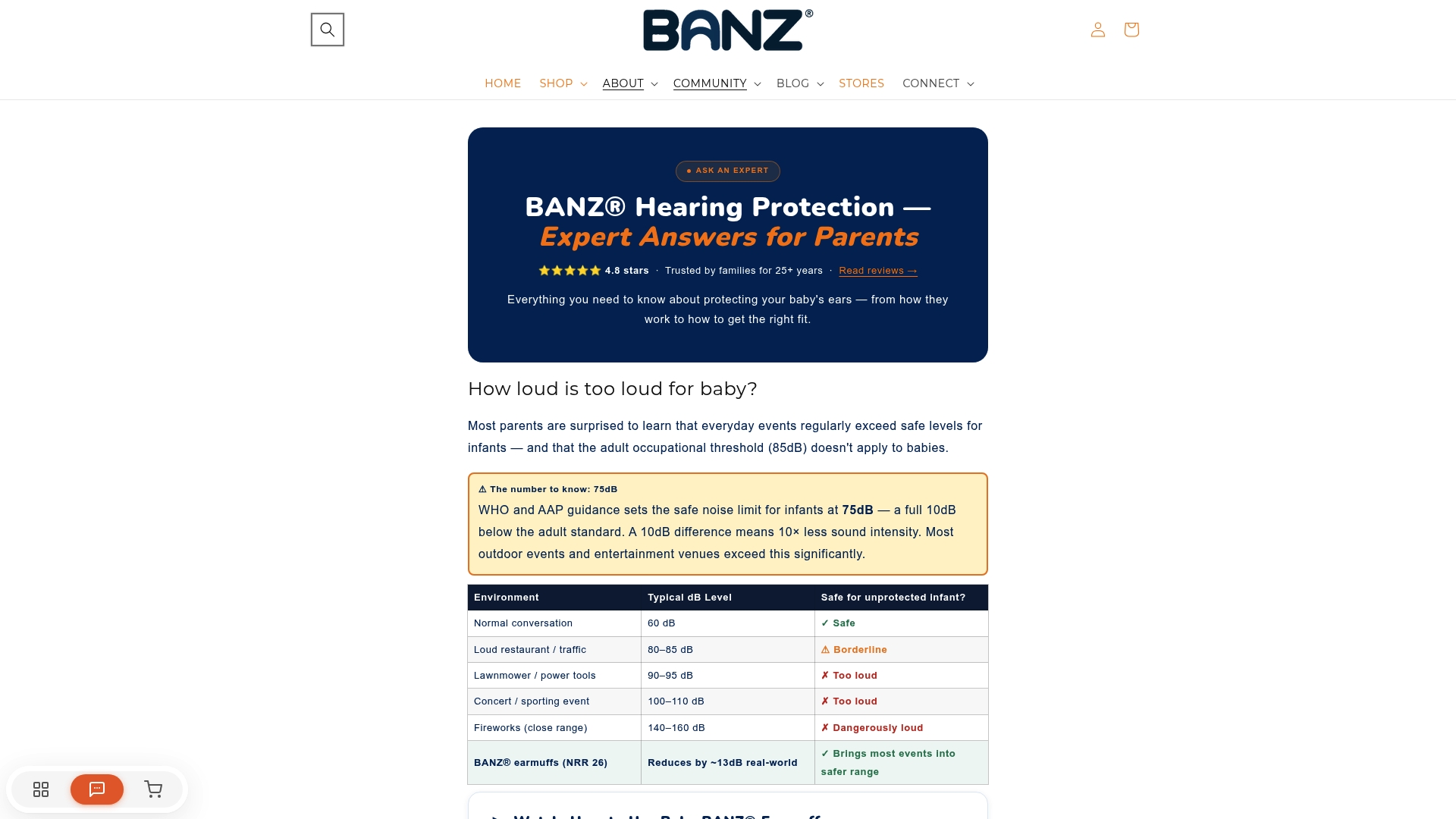
BANZ has helped over 2 million families across six continents build practical outdoor safety routines. The sun safety caregiver checklist is a good starting point for parents building a complete protection plan. For parents who want expert guidance on UV eye protection for children, the BANZ UV eye protection resource covers what to look for and why it matters from an early age.
FAQ
What SPF should toddler sunscreen be?
Use a broad-spectrum sunscreen with at least SPF 30 for toddlers. SPF 50 is a practical choice because most parents apply less than the recommended amount, and the higher SPF compensates for thinner coverage.
Can you use spray sunscreen on a toddler?
Spray sunscreens are not recommended for toddlers due to inhalation risks. Use lotion or stick formulas instead, which give you better control and allow you to rub the product in fully.
How often should you reapply sunscreen on an active toddler?
Reapply every two hours and immediately after swimming, sweating, or toweling off. Water-resistant sunscreens are only valid for 40 or 80 minutes, not for the full day.
What are the best sunscreen ingredients for toddlers?
Zinc oxide and titanium dioxide are the safest active ingredients for toddler sunscreen. These mineral filters sit on top of the skin, reflect UV rays, and are less likely to cause irritation than chemical UV filters.
Does clothing replace sunscreen for toddlers?
Clothing is more reliable than sunscreen in some ways because it does not wash off, but standard cotton has a low UPF rating that drops further when wet. Use UPF 50+ purpose-built garments alongside sunscreen for complete protection.


