


Playground sun hazards are defined as the combined risks of UV radiation, extreme surface heat, and inadequate shade coverage that threaten children’s safety during outdoor play. These are not minor inconveniences. Playground surfaces like metal, plastic, and dark rubber can reach 140–180°F in direct sunlight, causing rapid second-degree burns on contact. Children under 2 face the highest risk because their skin is thinner and their reaction time is slower. Understanding the types of playground sun hazards gives you the knowledge to act before an injury happens.
1. What types of playground sun hazards exist?
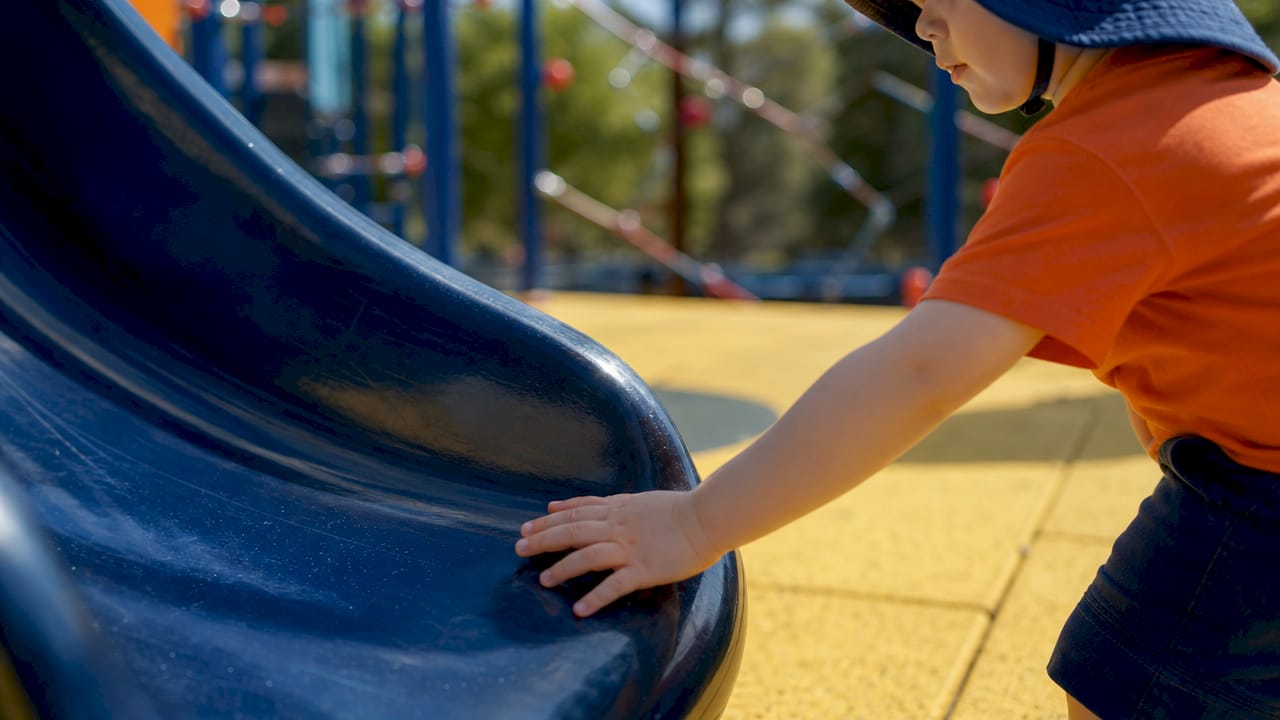
Playground sun hazards fall into three main categories: thermal surface burns, UV radiation exposure, and shade failure. Each one operates differently and requires a different response. Most caregivers focus on sunscreen and forget that the slide your child just went down may be hot enough to cause a burn in under a second.
Thermal hazards come from heated equipment and ground surfaces. UV hazards come from direct and reflected sunlight hitting unprotected skin and eyes. Shade failure happens when structures are poorly placed or sized, leaving children exposed during the highest-risk hours of the day. All three can occur simultaneously on a single playground visit.
2. How equipment and surface materials create burn risks
The material a playground is made from determines how dangerous it gets in the sun. Dark steel and dense rubber store and transfer heat efficiently, making them the most hazardous materials in direct sunlight. Many playground operators prioritize durability over thermal safety, which means these materials are everywhere.
Surface color matters as much as material type. Dark-colored surfaces can run 20–30°F hotter than lighter or natural surfaces, even when the air temperature feels moderate. A black rubber mat at 75°F ambient air can still reach temperatures that burn a toddler’s hand or knee.
The contact points that cause the most burns are:
- Metal slides and handrails: These heat up fastest and hold temperature the longest.
- Dark rubber fall zones: Ground-level surfaces that children land on or crawl across after exiting equipment.
- Plastic decking and platforms: Often overlooked because plastic feels less “metal-like,” but it still reaches dangerous temperatures.
- Painted steel climbing bars: Dark paint coatings increase heat absorption significantly.
Pro Tip: Before letting children play, press the back of your hand against metal and rubber surfaces for three seconds. If you pull away, the surface is too hot for a child’s skin.
3. How UV radiation harms children on playgrounds
UV radiation is the invisible hazard on every playground. The sun emits two types that damage skin: UVA rays penetrate deep into skin layers and cause long-term cellular damage, while UVB rays cause the surface burns most parents recognize as sunburn. Both types are present during every outdoor play session.
CDC guidelines identify peak UV hours as 11 AM to 3 PM. Exposure during this window carries the highest risk of UV-induced skin damage in children. The damage is cumulative, meaning repeated short exposures add up over a season even when no single session causes a visible burn.
Shade structures are the most effective physical barrier against UV. Quality shade blocks 90–98% of harmful UV rays, making placement and coverage the most important variables in any playground’s sun safety design. Sunscreen alone does not replicate that level of protection.
Protective measures every caregiver should apply:
- Apply broad-spectrum SPF 30+ sunscreen 15 minutes before play, and reapply every two hours.
- Dress children in UPF 50+ clothing, including long-sleeved shirts and wide-brim hats.
- Use UV-protective eyewear rated for children, since eyes are highly vulnerable to UV damage.
- Schedule playground visits before 10 AM or after 4 PM whenever possible.
- Monitor the UV index before heading out using a real-time tool like the BANZ Protect app.
4. Why shade structure placement is critical
A shade structure placed in the wrong location provides almost no real protection. Sun-angle changes throughout the day cause what designers call “sun-edge migration,” where shade that covers a play area at 10 AM no longer covers it by 1 PM. That shift leaves children exposed during the most dangerous UV window without any visible warning.
Effective shade design requires modeling the sun’s full arc across peak hours, not just a single fixed point in time. Full-day sun movement modeling from 11 AM to 3 PM is the standard for ensuring consistent protection. A shade structure that only works for part of that window creates a false sense of security.
The most effective playground shade options include:
- Modular canopy systems that can be repositioned or extended as sun angles shift across seasons.
- Cantilever shade structures that cover large areas without support poles inside the play zone, eliminating fall hazards.
- Sail shade clusters installed at multiple angles to reduce sun-edge migration across different times of day.
- Permanent roof-style covers over high-use equipment like slides and climbing frames.
Shade poles placed inside fall zones create their own safety risk. Any structure must be designed so its supports sit outside the designated fall zone perimeter. This is a non-negotiable requirement in most playground safety standards.
Pro Tip: Hire a shade consultant who uses solar path software to model coverage across the full 11 AM to 3 PM window. A one-hour consultation often prevents years of inadequate protection.
5. Secondary sun hazard risks in playground layout
The burn risk does not end when a child finishes using a piece of equipment. Second contact burns happen when children exit slides or climbing structures onto unshaded fall zones or circulation paths. The ground they land on may be just as hot as the equipment they just left.
Rubber and asphalt fall zones absorb and retain heat throughout the day. By early afternoon, these surfaces can reach temperatures that cause burns through thin-soled shoes or bare feet. Most playground layouts treat fall zones as safety features for impact, not as thermal hazards that also need shade coverage.
Secondary hazard zones caregivers should watch for:
- Slide exit points: The rubber or asphalt directly at the base of every slide.
- Pathway connections: Walkways between equipment pieces that run through unshaded open areas.
- Bench and seating areas: Metal or dark-painted benches where caregivers sit while supervising can also reach burn temperatures.
- Entrance and exit gates: Often paved or surfaced with heat-retaining materials and rarely shaded.
Hot surface risk extends across the entire playground zone, including entrances, exits, and seating. Designing shade only over the main equipment misses a large portion of the area where children actually spend time. Layout modifications like extending shade sails over fall zones and adding permeable ground cover in circulation paths reduce these secondary risks significantly.
6. Practical steps to protect children from playground sun hazards
Timing is the single most effective tool a caregiver controls. Avoiding the 11 AM to 3 PM peak UV window reduces UV exposure risk more than any single product. When midday play is unavoidable, layering multiple protective measures together provides the best coverage.
Check equipment temperature before children start playing. A quick hand-test on slides, bars, and rubber surfaces takes ten seconds and can prevent a serious burn. This habit is especially important on days above 85°F or after equipment has been in direct sun for more than an hour.
Protective gear that makes a real difference:
- Wide-brim hats that shade the face, ears, and back of the neck.
- UPF 50+ sun shirts and rash guards for full-body coverage.
- Children’s UV sunglasses that wrap around the face to block reflected UV from ground surfaces.
- Closed-toe shoes with thick soles to protect feet from hot ground surfaces.
- A portable shade canopy or umbrella for seating areas without built-in shade.
Watch children for early signs of heat stress: flushed skin, unusual irritability, reduced activity, or complaints about being too hot. Children under 5 do not reliably self-regulate body temperature, so the caregiver carries that responsibility. A sun safety checklist helps make these steps consistent rather than reactive.
For caregivers who want broader outdoor safety knowledge, wilderness first aid basics cover heat-related illness recognition and response that applies directly to playground emergencies.
Key Takeaways
Playground sun hazards include thermal burns, UV radiation, and shade failure, and each type requires a specific protective response from caregivers.
| Point | Details |
|---|---|
| Surface heat causes burns fast | Metal and rubber surfaces reach 140–180°F in direct sun, burning skin on contact. |
| Peak UV hours are 11 AM to 3 PM | Schedule play before 10 AM or after 4 PM to cut UV exposure risk significantly. |
| Shade placement determines effectiveness | Sun-edge migration means shade must be modeled across the full peak-hour window, not just one time. |
| Secondary contact zones are often missed | Fall zones, pathways, and seating areas retain dangerous heat and need shade coverage too. |
| Layer multiple protections | Combine timing, UPF clothing, UV sunglasses, sunscreen, and equipment checks for full coverage. |
What I’ve learned from watching playgrounds get this wrong
By Shari M. Murphy
Most playground safety conversations focus on falls and equipment failures. Sun hazards get treated as a weather problem, not a design problem. That framing is wrong, and it costs children.
I’ve watched caregivers apply sunscreen carefully and then let their kids run onto a black rubber fall zone at 1 PM without a second thought. The sunscreen protects the skin from UV. It does nothing for a 160°F surface. These are two separate hazards that require two separate responses.
The detail that surprises most people is the shade placement issue. A shade sail that looks like it covers the whole play area at 9 AM may leave the slide exit completely exposed by noon. Shade that isn’t modeled for sun movement is not really shade. It’s a structure that creates confidence without providing protection.
My advice to caregivers is to stop treating playground sun safety as a single-step problem. Check the surface temperature. Check the UV index. Check whether the shade actually covers where your child is playing right now, not where it covered an hour ago. That three-part check takes under a minute and addresses all the major hazard types at once.
— Shari M. Murphy
BANZ sun safety gear for playground-ready protection
Protecting children from playground sun hazards starts with the right gear. BANZ offers UPF 50+ sun hats, UV-blocking sunglasses, and the free BANZ Protect app for real-time UV monitoring, giving caregivers a complete toolkit for outdoor play.
BANZ products meet the needs of children from infancy through school age, with designs built for active outdoor use. The UV eye protection range is specifically developed for children’s eye anatomy and UV vulnerability. For caregivers who want a full gear review before heading to the playground, the outdoor sun safety gear guide covers every category with product-specific recommendations. BANZ has supported over 2 million families across six continents, and every product is built around the same principle: protection that works when it matters.
FAQ
What temperature do playground surfaces reach in direct sun?
Metal and rubber playground surfaces can reach 140–180°F in direct sunlight. Contact with surfaces above 130°F can cause second-degree burns in under a second.
What are the peak UV hours at a playground?
Peak UV hours run from 11 AM to 3 PM, according to CDC guidelines. Scheduling playground visits outside this window is the most effective single step for reducing UV exposure risk.
How much UV do shade structures block?
Quality shade structures block 90–98% of harmful UV rays. Effectiveness depends on proper placement that accounts for sun-angle changes throughout the day.
Are dark-colored playground surfaces more dangerous?
Dark surfaces run 20–30°F hotter than lighter surfaces under the same sun conditions. This temperature difference is enough to cause burns even when the air temperature feels comfortable.
What is “second contact” burn risk?
Second contact burns occur when children exit equipment onto unshaded fall zones or pathways that have absorbed heat throughout the day. These ground-level surfaces are often as hot as the equipment itself and require the same shade coverage to be safe.


