


A UV protective legionnaire hat is a style of headwear with a front brim and an extended back flap that covers the neck, ears, and sides to prevent sunburn. The design originated with the French Foreign Legion and has since become a standard in children’s sun safety. Certified UPF 50+ fabric blocks over 98% of UVA and UVB rays, making this hat one of the most effective sun protection headwear options available. The Cancer Council recognizes legionnaire hats as the preferred choice for children because the flap stays in place without any adjustment from the child. BANZ has built its children’s hat line around this exact design, combining UPF 50+ coverage with features built for active kids.
What is a UV protective legionnaire hat and how does it work?
A legionnaire hat works by covering every area a standard cap misses. The front brim shades the forehead and face. The extended back flap wraps around the neck, ears, and sides of the head, creating a continuous shield against UV radiation. No other common hat style delivers that combination without requiring the child to reposition it constantly.
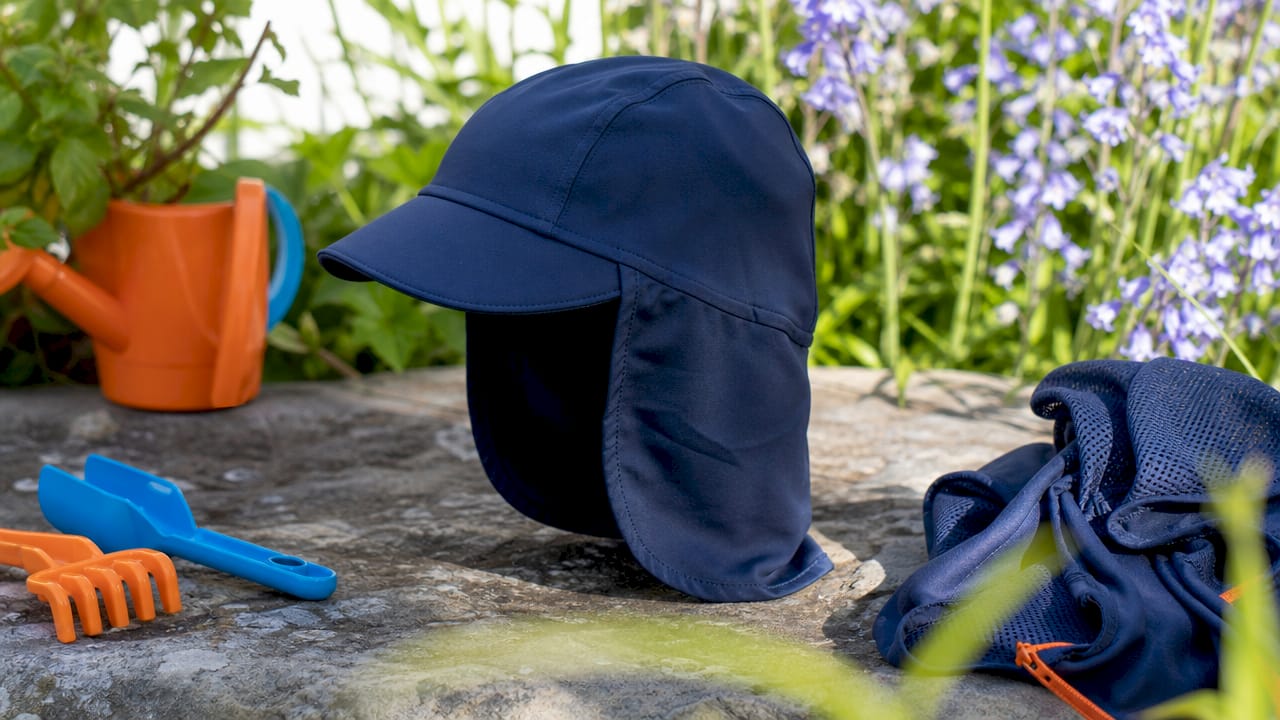
The fabric does the heavy lifting. UPF 50+ certified material blocks over 98% of both UVA and UVB rays. UPF stands for Ultraviolet Protection Factor. Think of it as SPF for fabric. A rating of 50+ means fewer than 1 in 50 UV rays pass through the material to reach the skin.
Design features that support active wear include:
- Extended neck flap that reaches down to collar level, covering the most UV-exposed skin on a child’s body
- Front brim wide enough to shade the forehead and upper cheeks
- Adjustable chin strap that keeps the hat secure in wind and during movement
- Moisture-wicking fabric that pulls sweat away from the skin to prevent overheating
- Mesh ventilation panels that allow airflow and keep the hat comfortable during active play
Pro Tip: Check that the neck flap reaches the collar line. A flap that stops at mid-neck leaves the most sun-exposed skin unprotected, which defeats the purpose of the hat.
Regular baseball caps and bucket hats leave the ears and neck fully exposed. Even wide-brimmed hats can shift in wind and fail to maintain consistent coverage. The legionnaire design removes that variable by wrapping coverage around the head rather than just sitting on top of it.
What are the benefits of legionnaire hats versus other sun-protective headwear?
The legionnaire hat’s core advantage is coverage of the areas children burn most. Public health guidance from the Cancer Council identifies the neck, ears, and cheeks as the most frequently missed yet highest-risk UV zones on a child’s body. The legionnaire design addresses all three without requiring the child to do anything differently.
| Headwear type | Face coverage | Ear coverage | Neck coverage | Stays secure during play |
|---|---|---|---|---|
| Baseball cap | Partial | None | None | Yes |
| Bucket hat | Good | Partial | None | Moderate |
| Wide-brim hat | Good | Good | Partial | Low |
| Legionnaire hat | Good | Full | Full | Yes |
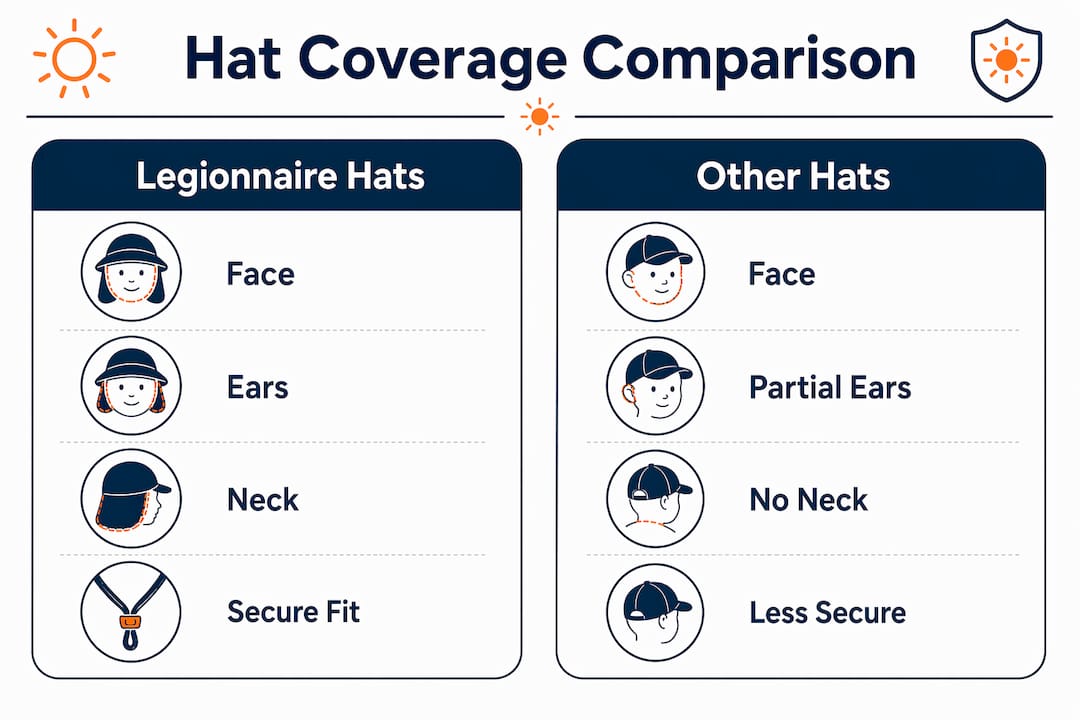
Hands-free protection is a real advantage for children. Kids do not stop to adjust their hats. A legionnaire hat with an adjustable chin strap stays in position through running, climbing, and swimming. Legionnaire hats are durable and built for exactly this kind of active outdoor use, covering the forehead, ears, and neck consistently throughout the activity.
Health organizations back this style specifically because it removes the human error factor. A child wearing a legionnaire hat gets full coverage whether they are paying attention to it or not. That reliability is what separates it from other sun protection headwear styles that depend on correct positioning to work.
How to choose the best UV protective legionnaire hat for your child
Choosing the right hat comes down to five practical criteria. Work through each one before buying.
-
Confirm the UPF 50+ certification. The label must state UPF 50+, not just “UV protective” or “sun safe.” Certification means the fabric has been independently tested. Without it, the UV blocking claim is unverified.
-
Check the neck flap length. The flap must reach the collar. Some budget hats leave gaps that compromise protection at the base of the neck. Hold the hat up and measure the flap against the back of your child’s neck before purchasing.
-
Test the chin strap. An adjustable chin strap is not optional for active children. Wind can lift a loose flap and expose the skin underneath. The strap should adjust snugly without being uncomfortable, and the fastener should be easy for a child to manage independently.
-
Evaluate the fabric. Look for lightweight, quick-dry, and breathable materials. A hat that makes a child feel hot will not get worn consistently. Moisture-wicking fabric keeps the hat comfortable through a full afternoon outdoors.
-
Get the right size. Measure your child’s head circumference and match it to the manufacturer’s size chart. A hat that is too large shifts and loses coverage. A hat that is too small will be pulled off. For toddlers specifically, check guidance on getting the right toddler fit before ordering.
Pro Tip: Machine-washable hats are worth the extra cost. A hat that is easy to clean gets washed more often, which preserves hygiene and keeps kids willing to wear it.
Tips for proper use and care of legionnaire hats
Wearing the hat consistently matters more than any single feature. Consistent hat use during peak UV times reduces cumulative lifetime UV exposure, which is the key factor in long-term skin cancer prevention. Peak UV hours run from 10 a.m. to 4 p.m. The hat goes on before going outside, not after arriving.
Layering protection gives the best results. Sun safety experts recommend combining a legionnaire hat with sunscreen on exposed skin, UV-blocking sunglasses, and protective clothing. Layering these strategies can reduce UV exposure on exposed skin significantly. No single item covers everything, and the hat works best as part of a complete approach.
Care habits that preserve UPF performance:
- Wash after each use in sweat and dirt conditions. Sunscreen residue and salt water degrade fabric over time if left untreated.
- Use cold or warm water and a gentle cycle. High heat can break down UPF fabric fibers and reduce blocking performance.
- Air dry rather than tumble dry. Heat from a dryer can shrink the hat and distort the flap shape.
- Inspect the flap regularly. As children grow, a hat that once reached the collar may no longer provide full coverage. Replace the hat when the fit changes.
- Store the hat flat or on a hook. Crushing the brim or stuffing the hat into a bag deforms the shape and reduces coverage area.
Proper care of legionnaire hats preserves UPF performance over time. A well-maintained hat lasts a full season and beyond without losing its protective rating.
Key takeaways
A UV protective legionnaire hat is the most reliable sun protection headwear for children because it covers the neck, ears, and face consistently without requiring any adjustment during play.
| Point | Details |
|---|---|
| UPF 50+ is the minimum standard | Only hats with certified UPF 50+ fabric block over 98% of UVA and UVB rays. |
| Neck flap length determines coverage | The flap must reach the collar line to protect the highest-risk UV exposure area. |
| Chin strap keeps protection intact | An adjustable chin strap prevents wind from lifting the flap and exposing skin during activity. |
| Layering multiplies protection | Combine the hat with sunscreen, sunglasses, and protective clothing for full UV defense. |
| Care preserves performance | Wash after each use and air dry to maintain UPF rating throughout the hat’s lifespan. |
Why I think parents underestimate the legionnaire hat
I have spent years looking at how children actually behave outdoors, and the gap between what parents buy and what actually stays on a child’s head is significant. Wide-brim hats look great in product photos. They come off within ten minutes of active play. A legionnaire hat with a chin strap does not.
The coverage argument is also stronger than most parents realize. The neck is one of the most UV-exposed areas on a child’s body, and it is almost never covered by a standard hat. Parents apply sunscreen carefully to the face and arms, then leave the back of the neck completely bare. The legionnaire design closes that gap automatically.
My honest view is that comfort compliance is the real test of any children’s hat. A hat that is too hot, too stiff, or too loose will not get worn. The best legionnaire hats use lightweight, breathable fabric that children genuinely do not mind wearing. That is the feature worth prioritizing above everything else, including color and style.
Habit formation matters more than any single purchase. Children who wear a hat consistently from an early age treat it as normal. Starting that habit with a hat that actually stays on and covers the right areas sets the right foundation. The outdoor sun safety gear you choose now shapes the habits your child carries into adulthood.
— Shari M. Murphy
BANZ UV protective legionnaire hats for kids
BANZ designs its children’s legionnaire hats specifically for the conditions parents face: active kids, long outdoor sessions, and unpredictable weather. Every BANZ hat carries a certified UPF 50+ rating, meaning the fabric has been independently tested to block over 98% of UVA and UVB rays. Adjustable chin straps keep the hat secure through running, swimming, and everything in between.
BANZ has protected over 2 million families across six continents since its founding in Australia. The free BANZ Protect app adds real-time UV monitoring so you know exactly when conditions require full protection. Parents who want trusted, tested sun protection for their children can view BANZ kids’ sun hats and find the right fit for their child’s age and activity level.
FAQ
What is a legionnaire hat?
A legionnaire hat is a style of headwear with a front brim and an extended back flap that covers the neck, ears, and sides of the head. The design originated with the French Foreign Legion and is now widely used for children’s sun protection.
What does UPF 50+ mean on a hat?
UPF 50+ means the fabric blocks over 98% of UVA and UVB rays. It is the highest standard rating for UV-protective fabric and the minimum recommended for children’s sun protection headwear.
Are legionnaire hats better than bucket hats for kids?
Legionnaire hats provide full coverage of the neck and ears, which bucket hats do not. The Cancer Council recommends legionnaire-style hats for children because the flap covers the most commonly missed high-risk UV areas.
How do I know if a legionnaire hat fits correctly?
The neck flap should reach the collar line, the brim should shade the forehead without obstructing vision, and the chin strap should hold the hat snugly without pinching. A hat that shifts during movement needs a smaller size or a tighter strap adjustment.
Can I wash a UPF 50+ legionnaire hat without losing its protection?
Yes, if you wash it correctly. Use cold or warm water on a gentle cycle and air dry the hat. High heat from a dryer can break down UPF fabric fibers and reduce the hat’s UV blocking performance over time.
Recommended
- Sun Hats for UV Protection: A Parent’s Safety Guide – BANZ® Carewear USA
- Outdoor Sun Safety Gear Examples for Kids in 2026 – BANZ® Carewear USA
- Clothing Color and UV Blocking: A Parent’s Guide – BANZ® Carewear USA
- Fabric Weave and UV Protection: A Parent’s Guide – BANZ® Carewear USA
Ready to protect your little one?
The BANZ® Children's Flap Hat offers UPF 50+ protection for face, neck and ears — built for play, not just the pool.
Shop the BANZ® Flap Hat →


