


Effective child sun protection requires a layered approach, not just sunscreen. The sun safety products caregivers checklist that pediatric dermatologists recommend in 2026 combines broad-spectrum mineral sunscreen, UPF 50+ clothing, wide-brimmed hats, and UV-blocking sunglasses into one coordinated system. Sunscreen alone is insufficient; physical barriers and shade are what complete the defense. This guide gives you a product-by-product breakdown so you can build a reliable routine before your next outdoor outing.
1. What are the top sunscreens caregivers should use on children?
Mineral-based sunscreens are the right choice for children under 12. Pediatricians recommend zinc oxide or titanium dioxide because these ingredients sit on the skin surface rather than absorbing into it. The FDA considers mineral filters the safest option for kids, while chemical filters remain under review.
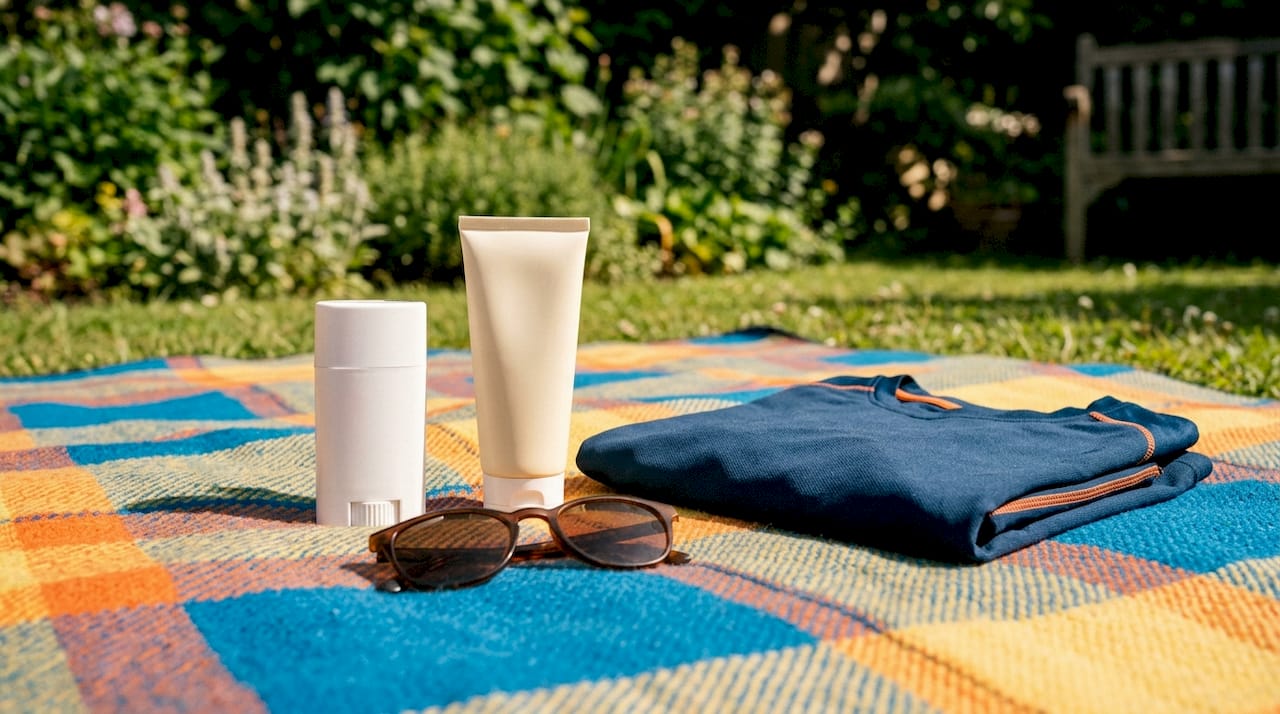
Application method matters as much as the formula. Lotion or stick sunscreens provide more reliable coverage than sprays. Sprays create inhalation risk and uneven application, especially on young children who move constantly.
Follow these application guidelines every time:
- Choose broad-spectrum, water-resistant sunscreen with at least SPF 30
- Apply about 1 ounce 15–30 minutes before going outside
- Cover all exposed skin, including ears, the back of the neck, and the tops of feet
- Reapply every 2 hours or immediately after swimming, sweating, or toweling off
- Check the expiration date before each season; expired sunscreen loses effectiveness
- Store sunscreen away from heat. Hot cars degrade sunscreen and reduce its chemical stability
Pro Tip: Keep a dedicated sunscreen in your outdoor bag so it never gets left behind. A travel-size stick sunscreen works well for face reapplication on the go.
For infants under 6 months, skip sunscreen entirely. Shade and protective clothing are the only recommended tools for this age group.
2. Which physical barrier products offer effective UV protection?
Physical barriers are the most underused part of a sun protection products checklist. Sunscreen wears off, gets missed in spots, and requires reapplication. UPF clothing, hats, and sunglasses provide continuous protection without any reapplication.
UPF 50+ fabrics block 98% of UV rays. A regular cotton shirt, especially when wet, offers very little UV defense. Tightly woven fabrics in dark or bright colors perform best. Understanding UPF 50 protection for kids helps you choose clothing that actually delivers on its rating.
| Product | UV Protection Level | Key Consideration |
|---|---|---|
| UPF 50+ shirt | Blocks 98% of UV rays | Replace every 2–3 seasons |
| Regular cotton shirt | Low, especially when wet | Not reliable for sun protection |
| Wide-brimmed hat (3+ inch brim) | High for face, neck, ears | Baseball caps leave ears and neck exposed |
| UV-blocking sunglasses | High for eyes and surrounding skin | Look for UV400 or 100% UV protection label |
Wide-brimmed hats protect the face, neck, and ears. Baseball caps leave too much skin exposed to count as adequate protection. A brim of at least 3 inches provides meaningful coverage for a child’s face and neck.
UV-blocking sunglasses protect both the eyes and the delicate skin around them. Look for lenses labeled UV400 or 100% UV protection. Wraparound styles reduce light entering from the sides.
Pro Tip: UPF clothing effectiveness declines with wear, stretching, and washing. Replace sun-protective clothing every 2–3 seasons to maintain reliable UV defense.
3. How to build a caregiver’s sun safety checklist for outdoor activities
A reliable checklist removes guesswork from every outing. The goal is to make sun protection automatic, not an afterthought. Use this numbered routine before and during any outdoor activity.
- Check UV index before leaving. The BANZ Protect app provides real-time UV monitoring. A UV index of 3 or higher requires full protection measures.
- Time outings strategically. Avoid peak UV hours from 10 a.m. to 4 p.m. when UV radiation is strongest. Morning and late afternoon outings reduce baseline exposure.
- Apply sunscreen first. Put on mineral sunscreen 15–30 minutes before going outside. Cover all exposed skin thoroughly.
- Dress in UPF 50+ clothing. Layer a UPF shirt, sun hat, and UV-blocking sunglasses before stepping out. Check sun protection layers for toddlers for age-specific guidance.
- Pack reapplication supplies. Bring enough sunscreen for every 2 hours outdoors. A stick sunscreen is easy to apply on a moving child.
- Create shaded rest spots. Bring a portable sun shelter or umbrella for breaks. Surfaces like sand, water, and concrete reflect UV rays, effectively doubling exposure risk in open environments.
- Hydrate consistently. Heat and sun exposure increase fluid loss. Offer water regularly, especially for children under 5.
- For infants under 6 months: Skip sunscreen. Focus entirely on shade and protective clothing. A stroller canopy and UPF wrap are the right tools for this age.
4. What common caregiver mistakes reduce sun protection effectiveness?
Most sun protection failures come from application errors, not product failures. Knowing the most common mistakes helps you fix them before they become a problem.
- Underapplying sunscreen. Applying less than the recommended 1 to 1.5 ounces reduces labeled SPF protection significantly. A full-body application for a child should use roughly a shot glass worth of product.
- Applying sunscreen too late. Sunscreen needs 15–30 minutes to bond with skin before it works. Applying it in the parking lot does not count as adequate preparation.
- Skipping reapplication after water. Water-resistant does not mean waterproof. Reapply immediately after swimming or heavy sweating, regardless of how long ago the last application was.
- Using hats without adequate brim coverage. Baseball caps protect the forehead but leave ears and the back of the neck fully exposed. Wide-brimmed hats are the correct choice.
- Choosing sunglasses without UV ratings. Dark lenses without UV protection can actually increase UV exposure by causing pupils to dilate. Always check for UV400 labeling.
- Storing sunscreen in the car. Heat degrades sunscreen chemistry. Keep it in a cool bag or indoors between uses.
Pro Tip: The best sunscreen for kids is the one that gets applied consistently. Broad-spectrum and water-resistant are the two criteria that matter most. Pick a formula your child tolerates and stick with it.
5. What are budget-friendly sun safety products caregivers can consider?
Effective sun protection does not require expensive gear. Several affordable options meet the same safety standards as premium products.
- Affordable mineral sunscreens. Many store-brand mineral sunscreens use zinc oxide at effective concentrations. Check the label for broad-spectrum coverage and SPF 30 or higher. Understanding the difference between mineral vs chemical sunscreen helps you choose confidently at any price point.
- UPF hats at accessible price points. BANZ offers children’s sun hats with UPF 50+ protection that are reversible, making them a two-in-one value. Reversible designs extend the useful life of the hat.
- Portable sun shelters. A basic beach umbrella or pop-up sun tent costs less than a single dermatology visit. These create reliable shade for infants and toddlers who cannot wear sunscreen.
- Multi-use UPF clothing. Rash guards designed for swimming double as sun protection during any outdoor activity. One garment covers beach, pool, and park outings.
| Budget Option | Protection Level | Best For |
|---|---|---|
| Store-brand mineral sunscreen | SPF 30+, broad-spectrum | Daily use, full-body application |
| Reversible UPF 50+ hat | Blocks 98% of UV | Toddlers and school-age children |
| Pop-up sun shelter | High shade coverage | Infants, stationary play areas |
| Rash guard UPF shirt | UPF 50+ when dry | Swimming and active outdoor play |
Verifying efficacy on a budget is straightforward. Look for UPF ratings on clothing labels and SPF 30 or higher with broad-spectrum labeling on sunscreen. Those two markers confirm a product meets the minimum standard. For a broader look at what gear works in practice, outdoor sun safety gear examples for kids in 2026 covers current options across price ranges.
Key takeaways
Layered sun protection using mineral sunscreen, UPF 50+ clothing, wide-brimmed hats, and UV-blocking sunglasses gives children the most reliable defense against UV exposure during outdoor activities.
| Point | Details |
|---|---|
| Use mineral sunscreen correctly | Apply 1 ounce 15–30 minutes before going out and reapply every 2 hours. |
| Layer physical barriers | UPF 50+ clothing blocks 98% of UV rays; hats and sunglasses cover what sunscreen misses. |
| Avoid peak UV hours | Schedule outings before 10 a.m. or after 4 p.m. to reduce baseline UV exposure. |
| Skip sunscreen for infants under 6 months | Use shade and protective clothing only for this age group. |
| Replace UPF clothing regularly | Sun-protective fabrics lose effectiveness after 2–3 seasons of wear and washing. |
What I’ve learned about making sun safety actually stick
The biggest gap in most caregiver sun safety routines is not knowledge. It is consistency. Caregivers know sunscreen exists. What breaks down is the habit of applying it correctly, every time, before going outside.
What I have found after years of covering child safety topics is that the products children tolerate are the products that get used. A sunscreen that stings eyes gets skipped. A hat that a toddler immediately pulls off stays in the bag. Choosing products your child accepts is not a compromise. It is the whole point. Packable sun protection gear that travels easily also gets used more often than bulky alternatives left at home.
The 2026 pediatric dermatology guidance reinforces something that has always been true: sunscreen is the base layer, not the complete solution. Physical barriers do the heavy lifting when reapplication gets missed, when children are in and out of water, or when reflected UV from sand and water doubles the exposure risk. Caregivers who build the full checklist into their routine, not just the sunscreen step, give children meaningfully better protection.
Keep the checklist short enough to remember. Sunscreen on, UPF clothing on, hat on, sunglasses on, shade available. That five-item sequence covers the core. Everything else is refinement.
— Shari M. Murphy
BANZ sun safety gear for your caregiver checklist
BANZ builds sun protection products specifically for children, with UPF 50+ rated hats and protective gear designed to stay on active kids. Founded in Australia by a family that could not find adequate protection for their own children, BANZ now serves over 2 million families across six continents.
BANZ’s reversible UPF 50+ sun hats give caregivers a practical, durable option that fits the checklist without adding complexity. The free BANZ Protect app adds real-time UV monitoring so you know exactly when protection is needed. For caregivers who also want to address noise safety during outdoor events, BANZ’s kids’ ear protection covers that need in the same trusted product line. Add BANZ gear to your checklist and cover two child safety priorities with one brand.
FAQ
What sunscreen is safest for children under 12?
Mineral sunscreens with zinc oxide or titanium dioxide are the safest choice for children under 12. These ingredients sit on the skin surface rather than absorbing into it, and the FDA considers them the most reliable option for kids.
How much sunscreen should a caregiver apply to a child?
Apply approximately 1 ounce per full-body application, roughly equivalent to a shot glass. Applying less than this reduces the labeled SPF protection significantly.
Should infants under 6 months wear sunscreen?
No. The FDA advises against sunscreen for infants under 6 months. Shade and protective clothing are the correct tools for this age group.
How often does UPF clothing need to be replaced?
UPF clothing should be replaced every 2–3 seasons. Wear, stretching, and repeated washing reduce the fabric’s UV-blocking effectiveness over time.
What is the safest time of day for children to be outdoors?
Before 10 a.m. and after 4 p.m. are the lowest-risk windows for outdoor activity. UV radiation peaks between 10 a.m. and 4 p.m., and avoiding this window reduces baseline exposure for children.


